A Specification-Grade Guide for Any Plant that Moves Material by Road, Written for the Teams Who have to Make the Gate Provable, not Just Faster.
At 7:10 a.m. on a dispatch-heavy morning, the gate of a large plant is the most expensive 30 metres on the site. Forty trucks are queued on the approach road. One security guard is matching a paper gate pass against a registration number he can barely read through the dust. Somewhere in that line is a truck whose tag was moved from another vehicle last week, and nobody will find out until a reconciliation exercise three months from now, if at all.
The scene repeats at steel plants and cement works, at mines and ports, at chemical parks, power stations, warehouses and logistics hubs. Most gates were designed for a volume of traffic they stopped handling years ago; a single lane and a register that made sense at 60 vehicles a day now has to move 400. The queue is the visible symptom. The invisible one is that nobody can prove, later, exactly which vehicle and which driver were inside the plant at any given hour, or in what order.
This guide covers the system that produces that proof, end to end: how the identification works, where each verification layer draws its authority from, how the commercial check fits in, what the physics demands, and how the whole thing deploys. It is written for plant engineering, IT, security, and commercial teams — and the architecture is the same everywhere material crosses a boundary and becomes money.
The Gate is not a Checkpoint. It is the First Entry in a Record
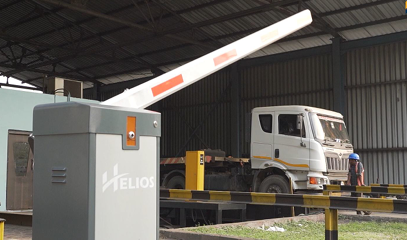
At any plant that moves material by road, one truck movement is a chain: gate-in, tare weight, loading or unloading, gross weight, gate-out. Tare is the empty weight, gross is the loaded weight, and the difference between them is the material being billed or paid for. It is the same vehicle and the same driver at every step, and the commercial risk sits in the gaps between those steps rather than at any single one.
A truck correctly identified at gate-in and then substituted before the second weighing produces a clean-looking record for a dishonest transaction. The paperwork is perfect. The material is not. This is why the gate and the weighbridge cannot sensibly be procured as two separate systems: the identity established at gate-in has to survive, unbroken, through to gate-out, or the project has automated data entry without closing any loss.
It is also why the specification is dual by design. A tag is fast, cheap, reads through dust, and is a transferable object with no opinion about which vehicle carries it. A camera needs no advance fitment, verifies the physical vehicle, and can be defeated by an obscured plate. Neither is sufficient alone, and that is not a defect in either. Independent signals that fail in different ways, cross-checked against each other, are how every serious identification system is built. India’s own barrier-free tolling programme, covered below, reached exactly this conclusion at national scale.
How the System Works, Step by Step
1. The vehicle approaches; the tag is read. RFID readers on the approach lane scan the vehicle’s FASTag — or the plant-issued tag — before the barrier, with nothing pausing in the queue. Antenna placement is tuned to lane geometry rather than maximum range, which is what keeps reads from spilling into the neighbouring lane.
2. The credential is resolved to a vehicle at source. For a FASTag, NETC (NPCI) integration derives the vehicle’s registration number and the tag’s status directly from the tag — a blacklisted, closed, or reassigned tag is caught here, before the barrier, not in next quarter’s reconciliation. For a plant-issued tag, the site’s issuance database resolves which EPC was issued to which vehicle. Either way, the read becomes a registration number the rest of the chain can verify against.
3. The AI layer verifies the physical vehicle. The camera layer runs several recognitions at once, which is why it is an AI layer rather than a plate reader. Number plate recognition reads the registration on the vehicle and matches it against the number resolved from the tag — a valid tag travelling on the wrong vehicle becomes an exception in real time. Vehicle profiling matches the truck’s observed characteristics against its own visit history, so the system knows whether this is the same physical vehicle that has entered the plant across its last five or ten visits, not merely a vehicle carrying the right credential.
4. The registries confirm what the documents claim. Vahan integration checks the registration against the national vehicle registry; Sarathi integration checks the driving licence against the national licence registry. An expired registration or an invalid licence is caught at the gate, not discovered later.
5. The driver layer establishes who is moving the material. This layer is configurable to site policy. At minimum, the driver is captured on entry and matched on exit — the system confirms that the person leaving the plant is the person who entered with that vehicle. Where the site requires full accountability, driver identity is verified against DigiLocker-sourced documents, binding a verified person to the movement rather than a face to a timestamp. Either way, when a load is short at the destination, there is a person on record, not just a registration number.
6. The movement is authorised against the order it belongs to. Verification against the purchase order or sales order closes the commercial loop — covered in full in the next section. Alongside it, the system applies the rules that govern the movement rather than checking a list of permitted tags: wrong gate, wrong time window, or an authorisation already used are all exceptions.
7. The barrier moves — once, for one vehicle. On confirmed authorisation, the barrier releases. Vision-based vehicle counting confirms that one vehicle, and only one, crossed on that authorisation, and the barrier closes on confirmed vehicle clearance rather than on a timer, which is what makes tailgating detectable at all.
8. The record writes itself. Automatic gate entry creation in ERP writes the movement into the system of record as it happens, with its supporting images attached. No transcription, no end-of-shift data entry, no gap between what happened at the gate and what the ERP records as having happened. Exceptions surface at a live gate console where someone on shift can act on them, with the images that triggered them.
9. Gate-out closes the loop. The vehicle and person leaving are matched against the vehicle and person who entered, and the record closes only when they agree. Where the gate feeds a weighbridge, the same identity has carried through both weighments in between, so the net weight on the invoice belongs, provably, to this vehicle, this driver, and this order.
The Commercial Layer: PO/SO Integration
Most gate systems answer one question: is this truck allowed in? The harder question is different: is this truck here against a real, open order? Order integration is what converts a vehicle log into a transaction log.
At gate-in, the movement is checked against the purchase order or sales order it claims to serve: the order exists, it is open, the vehicle and transporter match what was nominated, and the authorisation has not already been consumed. A vehicle arriving without a valid order behind it, against an order already fulfilled, or on a duplicate trip against the same authorisation is an exception rather than an entry. This is a document and authorisation check, not a check on the material itself; the weighbridge does that — but it is the check that stops a ghost trip at the gate, before a weighment ever exists to be billed twice.
The same integration works in reverse: when the movement completes, the gate entry, weighments and evidence post against that order line in ERP, so fulfilment status updates itself, and reconciliation starts from a record that was never manually keyed. For plants that have quantified what weighment leakage costs — the arithmetic is set out in our cost model of manual weighbridge operations — order-level authorisation at the gate is the one control that removes an entire fraud mechanism rather than merely detecting it.
What India’s Highways Decided and Why it Matters at a Plant Gate
 India’s toll network is being rebuilt around this exact architecture, and the design choice is worth understanding, because it is the same choice a plant faces at its gate.
The problem to solve. A conventional toll plaza makes every vehicle slow down and stop at a barrier. The replacement, Multi-Lane Free Flow (MLFF), removes the barrier completely: vehicles pass at normal speed, and the system identifies them in motion — with revenue riding on every read, no human checking anything, and no second chance if the read fails. That is a harder version of the plant gate problem, not a different one.
What was chosen. Not one technology. Two, running together and cross-checking each other: high-performance FASTag readers alongside cameras that read number plates, with AI-based analytics across both. The tag gives speed; the camera gives independent confirmation that the tag is on the vehicle it claims to be on. In July 2026, the Ministry of Road Transport and Highways reaffirmed this FASTag-plus-camera route for barrier-free tolling, while keeping satellite-based tolling under further deliberation.
Where it stands, India’s first MLFF plaza went live at Choryasi on NH-48 near Surat on 1 May 2026. NHAI has since reported the barrier-less system collecting two to three per cent more toll than the barrier-based setup it replaced — identification got stricter, and revenue went up, not down. A second barrier-free plaza followed on Delhi’s UER-II; seventeen plazas have been awarded for implementation, and tenders have been invited for over a hundred more. Early sites and early data, but the architecture decision is no longer hypothetical.
The relevance for a gate. The government’s own before-and-after of tag-based identification exists too: the NETC impact assessment for 2024–25, cited in a July 2026 parliamentary reply, found average toll-plaza crossing time fell from over 12 minutes under manual collection to roughly 40 seconds under electronic collection. When the national highway authority had to identify vehicles at speed, unsupervised, with money on every read, it specified tag plus camera plus AI. A plant gate guarding a 25-tonne consignment has at least as strong a case for both.
Getting the Physics Right
The architecture fails quietly if the physical layer is specified from a brochure instead of the site. Four design decisions account for most disappointing deployments.
– Tag choice. Passive UHF is the default for a vehicle gate: no battery, read ranges in metres, cheap enough for fleet-wide issue. FASTag itself is a passive UHF tag conforming to the ISO/IEC 18000-6C air-interface standard under NPCI’s NETC specifications, which is why a properly specified gate reader estate reads it natively — and why, for most commercial fleets, the credential costs nothing to issue at all. Active tags earn their premium only where read distance genuinely demands it, and they bring a fleet-wide battery replacement cycle; close-range HF cards are for personnel, not vehicles.
– Antenna tuning. Gate antennas are typically specified at four to eight metres, tuned to lane geometry and approach speed. Antennas set to maximum range read into the neighbouring lane, logging vehicles that never entered it — phantom entries that corrupt the gate register and, downstream, the weighment record.
– Environment and attrition. Metal bodies, wet ore, slurry and heavy cement dust all weaken UHF reads — an effect called detuning — and tags on working trucks get knocked off, painted over and damaged continuously. Standardise tag placement per vehicle class, design antenna siting for the environment, and budget replacement cycles from year one.
– Barrier logic. A barrier on a fixed timer allows a second vehicle through on one authorisation. Closing on confirmed vehicle clearance is the fix, and it requires vision — the system has to know a vehicle actually passed, which no tag read can tell it.
What a Complete System has to do
Not every product marketed as gate automation for industrial plants covers the chain above. Independent of vendor, these are the capabilities that map to the risks — use it as an evaluation checklist:
– Two independent identity signals, cross-checked — a tag read and a camera read that must agree before the barrier moves.
– Source-level credential resolution, so the tag becomes a registration number via NETC or the plant’s own issuance registry, rather than being trusted as-is.
– Vehicle profiling against visit history, so the system recognises the physical vehicle, not only the credential it carries.
– A driver layer with configurable depth, from entry-capture matched at exit up to verified identity binding.
– Order-level authorisation, so every entry maps to an open PO or SO and duplicate or orderless trips surface as exceptions.
– Vision-based counting with clearance-driven barrier logic, so one authorisation admits exactly one vehicle.
– A tamper-evident evidence record, so any movement can be reconstructed in an audit long after the fact.
– Native ERP write-back, because a system that produces a report someone re-keys has replaced one manual step with another.
Put together, the specification reads in one sentence: dual identification (tag plus AI vision), source-level resolution (NETC or the plant’s own tag registry, with Vahan, Sarathi and DigiLocker behind it), person-level accountability, order-level authorisation, vision-confirmed counting, and ERP-native records that carry unbroken from gate-in to gate-out.
Deployment: One System, One Implementation
A word on rollout, because the received wisdom here is dated. Legacy gate projects were staged — tags first, cameras a year later, driver identity the year after — because each layer meant new hardware, new wiring and a new vendor. Staging was a symptom of fragmented architecture, not a virtue.
An integrated camera-native platform removes the reason to stage. The physical estate — readers, cameras, barrier interfaces — is installed once, in one implementation window, and every verification layer above it is software configuration on that same estate. A typical implementation runs: lane survey and antenna plan; installation of readers, cameras, and barrier interfaces; integrations wired in parallel — NETC, Vahan, Sarathi, DigiLocker, PO/SO, and ERP; a parallel run against the existing manual register to verify reads and resolution; then cutover. The full chain goes live together.
What remains a matter of sequence is policy, not construction: a site can run any layer in log-only mode before it enforces — observing driver mismatches for a fortnight before holding vehicles on them, for instance — and tighten by configuration, gate by gate and flow by flow. Three governance decisions are worth settling before the implementation window opens, whatever the vendor: which system is the source of truth for the vehicle master, how exceptions are routed and cleared, and who owns the authorisation list operationally. Those are harder to fix later than any hardware choice.
Why Plants Choose TAT-Guard at the Gate
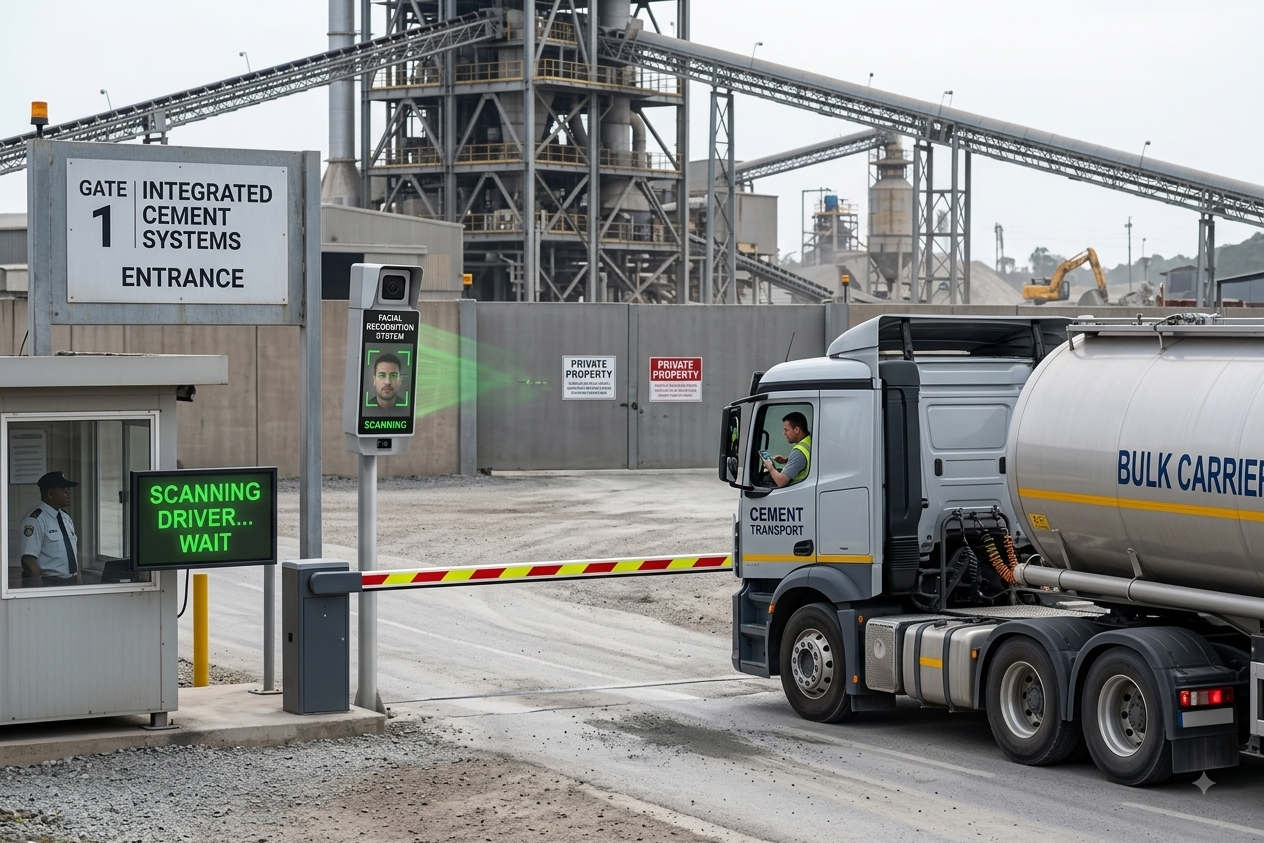
TAT-Guard, a gate access management platform from Helious Tech Solutions, runs the full chain above as one decision layer: RFID reads of FASTag or plant-issued tags; NETC (NPCI) resolution of the tag to its registered vehicle; AI recognition across number plate, vehicle profile and driver; Vahan and Sarathi registry checks; DigiLocker-verified driver identity where the site requires it; PO/SO authorisation; vision-based counting with clearance-driven barrier control; and automatic gate entry creation in ERP with the evidence trail attached.
Every verification layer past the tag read is configurable per site and per flow, which is what lets the same platform fit a captive fleet, an open commercial gate, and everything between, and what makes the single-window deployment described above possible. Helious is camera-native by origin rather than an RFID vendor that added cameras later, and the same camera estate extends to person and PPE detection at the gate line and fire-and-smoke detection on the approach.
Where the gate feeds a weighbridge, the identity carries into TAT Guard, the Helious AI unmanned weighbridge system, so the truck verified at gate-in is the truck on the platform for both weighments — built to a ~45-second TAT design target and designed for 10,000+ transactions a day. The weighbridge remains the load cells; what is automated is the decision and the record around them. The approach is deployed at integrated steel, metals, cement and pipe manufacturing sites, with ERP integration where required.
Conclusion
Gate access control has quietly changed category. It used to be a security purchase — a barrier that opens faster. Specified properly, it is commercial infrastructure: the point where a plant stops logging trucks and starts authorising transactions. The tag supplies speed at zero friction; the AI layer supplies the truth about the vehicle, the driver and the count; the registries and the order book supply authority; the ERP record makes all of it defensible months later.
The plants getting the most from automation are not the ones with the best tags or the best cameras. They are the ones that specified both as one system, put an order behind every entry, and built one unbroken identity chain from gate-in to gate-out. If you are evaluating that build for your own site, Secure Sight and our team are the natural next stop.