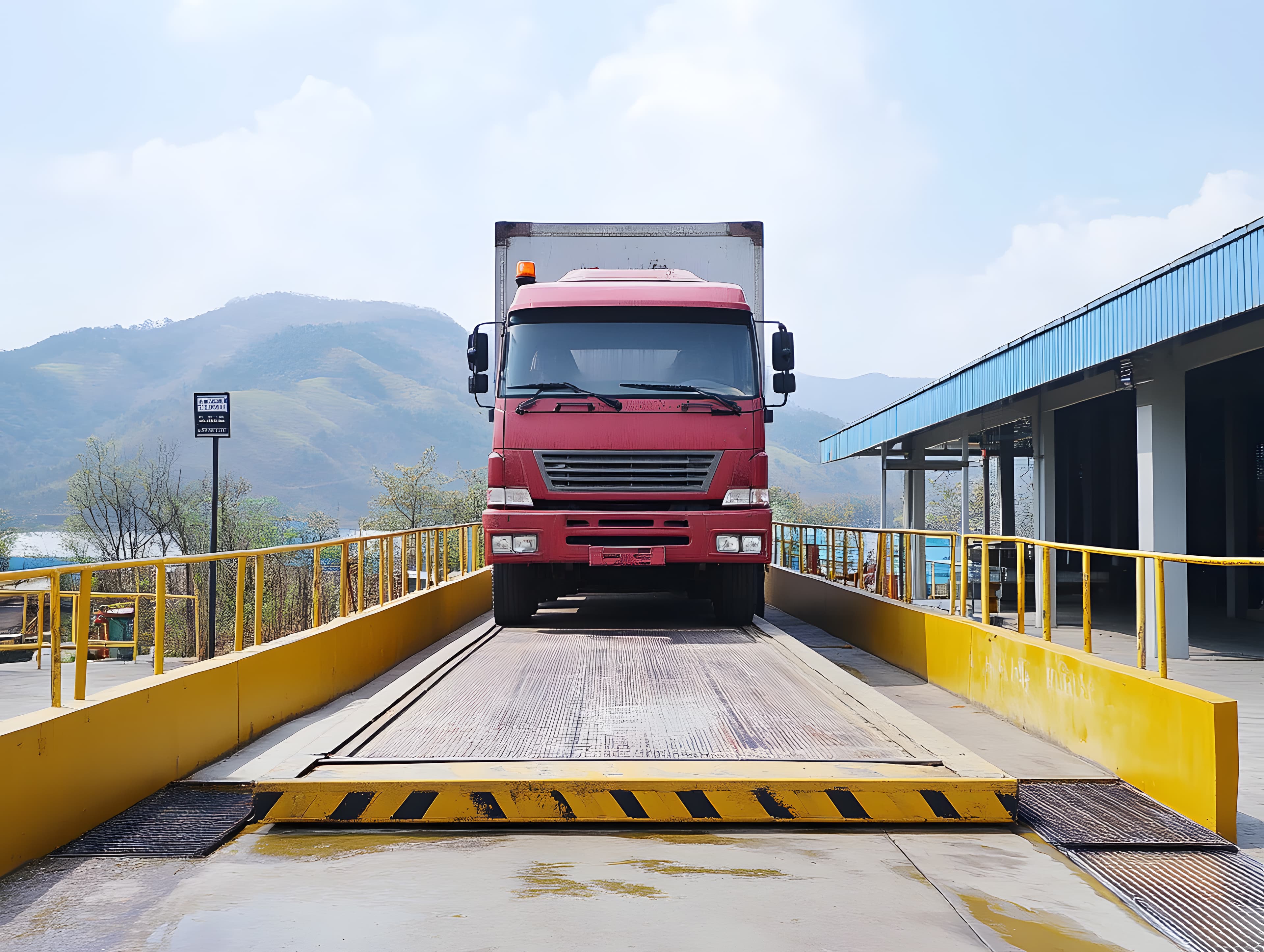
For a plant moving hundreds of trucks a day, the weighing lane is where money quietly leaks in three places at once: operator dependency, weighment manipulation, and slow turnaround times that create congestion and demurrage.
By 2026, the question in mining, cement, steel, ports and logistics is no longer whether to automate the weighbridge. As weighbridge automation India-wide matures, the question is:
Which partner can remove the operator from the loop, guarantee tamper-proof weighings, and push clean data directly into our ERP?
This guide is written for plant heads, operations leaders, logistics managers, procurement teams, and digital-transformation stakeholders evaluating weighbridge automation projects from a single retrofit to a multi-site unmanned weighbridge system India rollout.
What a Manual Lane Actually Costs

The cost of a manual weighbridge is rarely limited to salaries.
A manual operation typically incurs losses in three areas:
- Manpower costs
- Weighment manipulation and pilferage
- Slow vehicle turnaround times
Together, these factors create substantial operational inefficiencies that often exceed the investment required for automation. This is as true for a weighbridge automation steel plant project as it is for a weighbridge automation cement plant rollout, where sheer truck volume multiplies every leak.
What ROI Should You Expect From Weighbridge Automation?

Most buyers start by asking about price.
The better question is ROI.
Financial benefits typically come from:
- Reduced weighbridge manpower costs
- Lower pilferage and weighment manipulation (effective weighbridge fraud prevention)
- Faster truck turnaround times
- Reduced manual reconciliation effort
- Improved billing accuracy
- Better inventory visibility
For high-volume steel, mining, cement, power and port operations, savings from reduced detention and improved throughput frequently exceed direct labour savings.
Calculate Your ROI
Use our Operations ROI Calculator to estimate:
- Annual savings
- Payback period
- TAT improvement potential
- Pilferage reduction impact
- Recommended automation modules
ROI Calculator: https://www.heliostechsolutions.in/tools/roi-calculator
How to Evaluate a Weighbridge Automation Vendor
Any honest weighbridge software comparison should focus on six areas; this is where understanding how an unmanned weighbridge works separates genuine automation from a digitised manual lane:
1. Degree of Automation: Does the solution merely digitise the weighment process or provide a genuinely unmanned weighbridge operation?
2. Anti-Fraud Controls Look for:
- RFID verification
- ANPR verification
- AI positioning
- Image audit trails
- Tamper-proof transaction logging
3. ERP Integration: The system should provide real-time two-way integration with:
- SAP
- Oracle
- Microsoft Dynamics
- Custom ERP systems
4. AI Capabilities: Evaluate the AI weighbridge software layer:
- Human detection
- Material identification
- Ghost vehicle detection
- Anomaly detection
- AI-based positioning
5. Deployment & Support Assessment:
- Live installations
- Support reach
- Service capabilities
- Response commitments
6. Trust & Compliance Review:
- Certifications
- Security posture
- Industry recognitions
- References
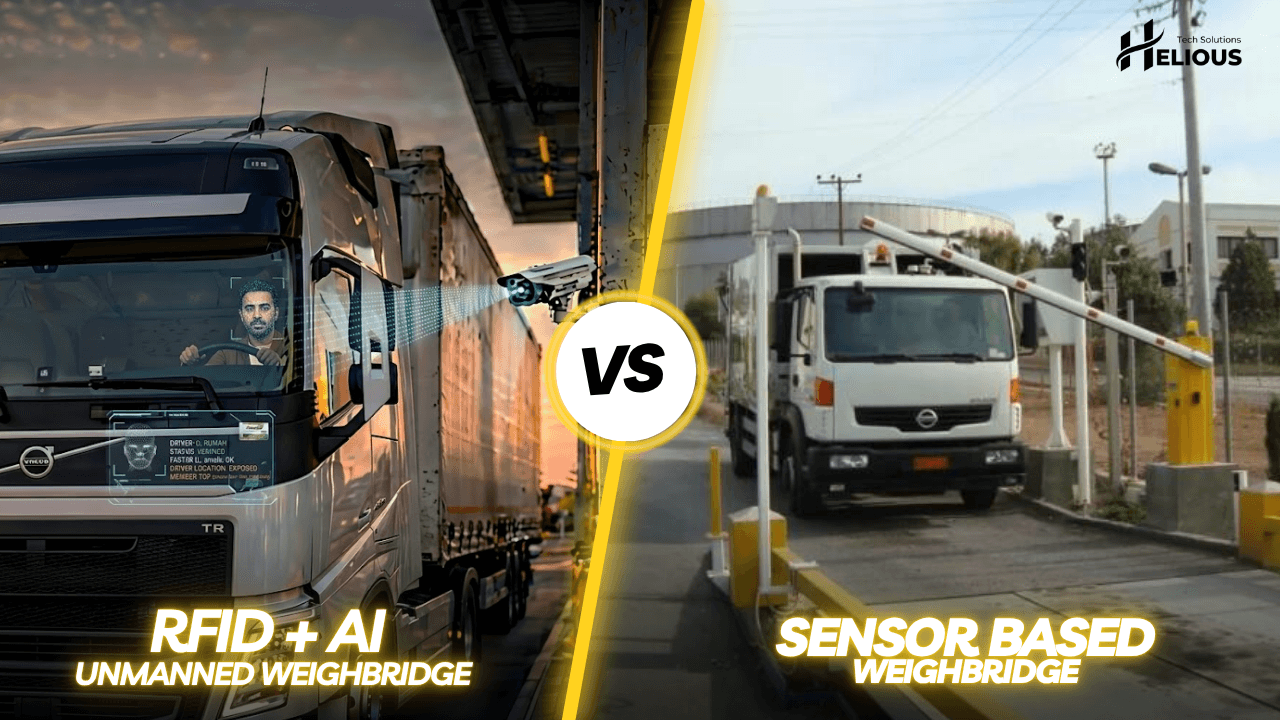
Manual vs Automated vs AI-Unmanned Weighbridge

This side-by-side is the fastest weighbridge software comparison for a buyer: traditional automation adds RFID and sensors but keeps a person in the loop, while an AI-unmanned approach closes the fraud, accuracy, and uptime gaps at once.
Essential Questions Every Buyer Should Ask
- Can the system operate without a weighbridge operator?
- How is vehicle identity verified?
- How is weight manipulation prevented?
- Does it integrate with our ERP?
- Can it retrofit existing weighbridges?
- How are exceptions handled?
- What happens during network outages?
- Is there a complete image-backed audit trail?
- What cybersecurity controls are implemented?
- Can we speak with reference customers?
Types of Weighbridge Automation Vendors

AI-Native Automation Platforms — focused on computer vision, AI and operator-free transactions.
Heritage Hardware Manufacturers — strong hardware expertise with varying automation maturity.
Software-First Vendors — focus on workflow digitisation and ERP integration.
Logistics & Regional Specialists — typically strongest where weighbridge operations are tightly linked to gate management and fleet operations.
The Helious Approach
Helious Tech Solutions Pvt. Ltd. is a Gurugram-headquartered, DPIIT-recognised company specialising in AI-powered industrial automation for steel, cement, mining, power and port operations and a strong contender for the best weighbridge automation company in India for buyers who need genuinely operator-free weighing.
Its flagship platform, TAT Guard, transforms conventional weighbridges into AI-driven unmanned operations and doubles as a truck turnaround time system that tracks and reduces TAT across the gate.
Key capabilities include:
- AI vehicle positioning
- RFID integration
- ANPR verification
- Driver biometric verification
- Human detection
- Ghost vehicle detection
- AI material identification
- ERP integration
- Real-time TAT monitoring
- Security-tested dashboards
The solution is deployed across multiple industrial sectors, including steel, cement, mining, power and ports.
Credentials
Helious is:
- Forbes India DGEMS Select 200 (2025)
- DPIIT Recognised Startup
Standards maintained:
- ISO/IEC 42001:2023 — Artificial Intelligence Management System
- ISO/IEC 27001:2022 — Information Security Management System
- ISO 9001:2015 — Quality Management System
- ISO 14001:2015 — Environmental Management System
- ISO 45001:2018 — Occupational Health & Safety Management System
How to Choose the Right Partner

Choose based on your primary operational challenge.
Prioritise AI-native platforms if:
- Theft is a concern
- Turnaround times are high
- Operator dependency is significant
Prioritise software-first platforms if:
- Hardware is already adequate
- ERP integration is the primary challenge
Prioritise service-heavy providers if:
- Uptime and local support are critical
Always evaluate:
- Total cost of ownership
- ERP integration capability
- Audit readiness
- Cybersecurity controls
- Live reference deployments
Request a Weighbridge Automation Assessment
Every operation is different.
The right solution depends on:
- Daily truck volumes
- Existing infrastructure
- ERP environment
- Security requirements
- Operational constraints
Start by Estimating the Business Impact: https://www.heliostechsolutions.in/tools/roi-calculator